Council approves new policy for Designing Quality Places
25 August 2024
Council approved the City’s new policy for Designing Quality Places at its meeting on 22 August 2024. The intention of the policy is to improve the quality of Cape Town’s neighbourhoods, streets and public places. Quality spaces that are useful, attractive, environmentally sustainable, economically viable and socially equitable improve residents’ physical and mental health, and wellbeing. Good urban design also promotes local identity and a sense of place.
'The quality of our cities, towns, neighbourhoods, streets and public spaces has a significant impact on our lives. We have all experienced it before when you arrive in a place – it could be any city or neighbourhood, or even a street – and it just feels good to be there, works well, and makes you want to stay longer. Given that most of us are not professionals in urban design we would not even realise that it is often how these spaces look and function and fit together, that makes us feel that way.
'Design should be centred around people and communities, and can transform spaces, give it purpose and relevance, and meaning. In September and October last year, the City gave the public the opportunity to comment on the revised Policy for Designing Quality Places. We used these comments to further refine the policy that has now been approved by Council and will guide the City's Development Management Department in assessing development applications, and inform City-led projects,' said the City's Deputy Mayor and Mayoral Committee Member for Spatial Planning and Environment, Alderman Eddie Andrews.
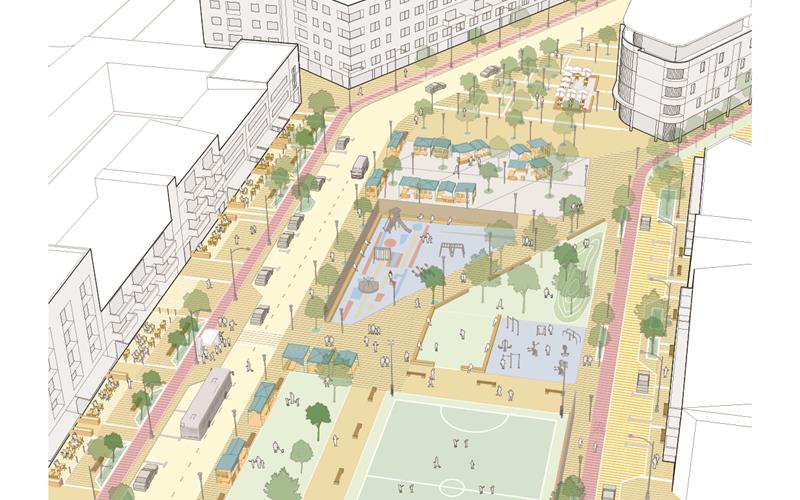 The policy is informed by the following principles:
- The greater public good – through the arrangement of activities, built form and open space, urban development must ensure the benefits are accessible to all and generate opportunities for social and economic development
- Holistic – urban design seeks to provide a holistic understanding of city-making and must take a balanced approach while prioritising the performance of the urban environment as a whole
- Identity, context and place making – Cape Town has a unique context and identity, shaped by its social, cultural, economic and physical landscape. Place-making should contribute to the unique identity and context of the immediate and broader urban landscape
- Integration and spatial transformation – the legacy of segregated development must be transformed through design to create a more equitable city
- Urban sustainability – development must align with sustainable development goals by protecting resources and creating dignified urban environments
- Intensity, diversity and adaptability – developments must meet a variety of demands from the widest possible range of users, amenities and social groups and must weave together different building forms, uses, tenures and densities
Policy objectives
- A legible spatial structure that combines urban, natural and green infrastructure
- Quality open spaces through placemaking for social interaction, retreat, relaxation and recreation
- Development should contribute to increased safety, sense of stability and general wellbeing of communities
- Design streets and squares to become multi-functional spaces that are people-centred, improve access and connectivity
- Design places that can be used for a variety of activities, and encourage social interaction
- Interfaces are fundamental to the way people experience the city and must be designed to prioritise pedestrians
- Urban development should acknowledge and support the role that informality plays in our city and for its residents
- Development should respect, protect, and enhance the surrounding natural environment as green open spaces are invaluable to cities and its residents
- Development should take into account the natural features, heritage structures, cultural practices and memory of the immediate neighbourhood through sensitive design
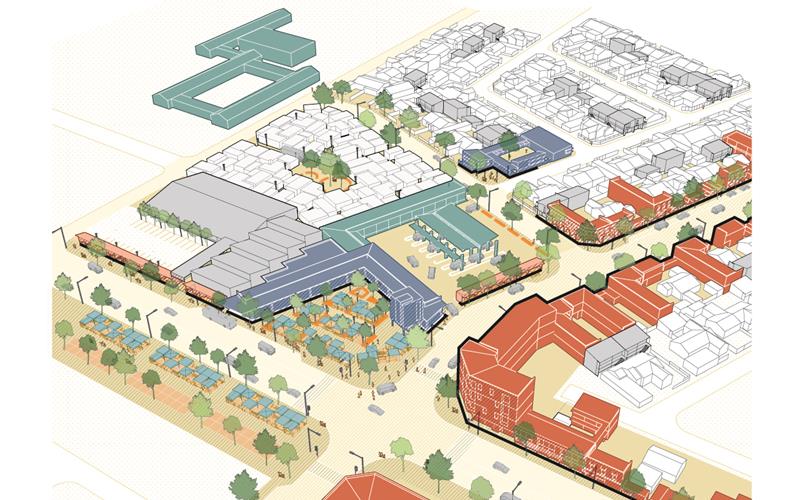 The policy will apply as follows:
- Where development proposals deviate from the City's planning vision and spatial policies
- When establishing new neighbourhoods, and where applications include new subdivisions into more than 20 urban land units
- When regenerating sites exceeding 1ha
- For development proposals that include the creation and upgrade of public open spaces, public or community facilities, and transport interchanges
- Proposals exceeding 1 000m² adjacent to or including development edges, natural resources and ecosystems, including biodiversity areas, river and wetland systems, coastlines and floodplains, cultural, heritage resources and business nodes
- Where site development plans are required for shopping centres, commercial developments, industrial and warehouse developments, developments of more than 12 residential units and development within transit accessible precincts
'The City's Integrated Development Plan pursues a Cape Town that is resilient, more spatially integrated and inclusive, and efficient. The newly approved Policy for Designing Quality Places sets the criteria to ensure the City's spatial vision as articulated in the Municipal Spatial Development Framework is realised in our local neighbourhoods where we live, work, socialise, and access community facilities and amenities,' said Alderman Andrews.
The policy for Designing Quality Places is available here: https://bit.ly/4cS3oFP
End
Published by:
Media Office, City of Cape Town